A short book about self-discipline
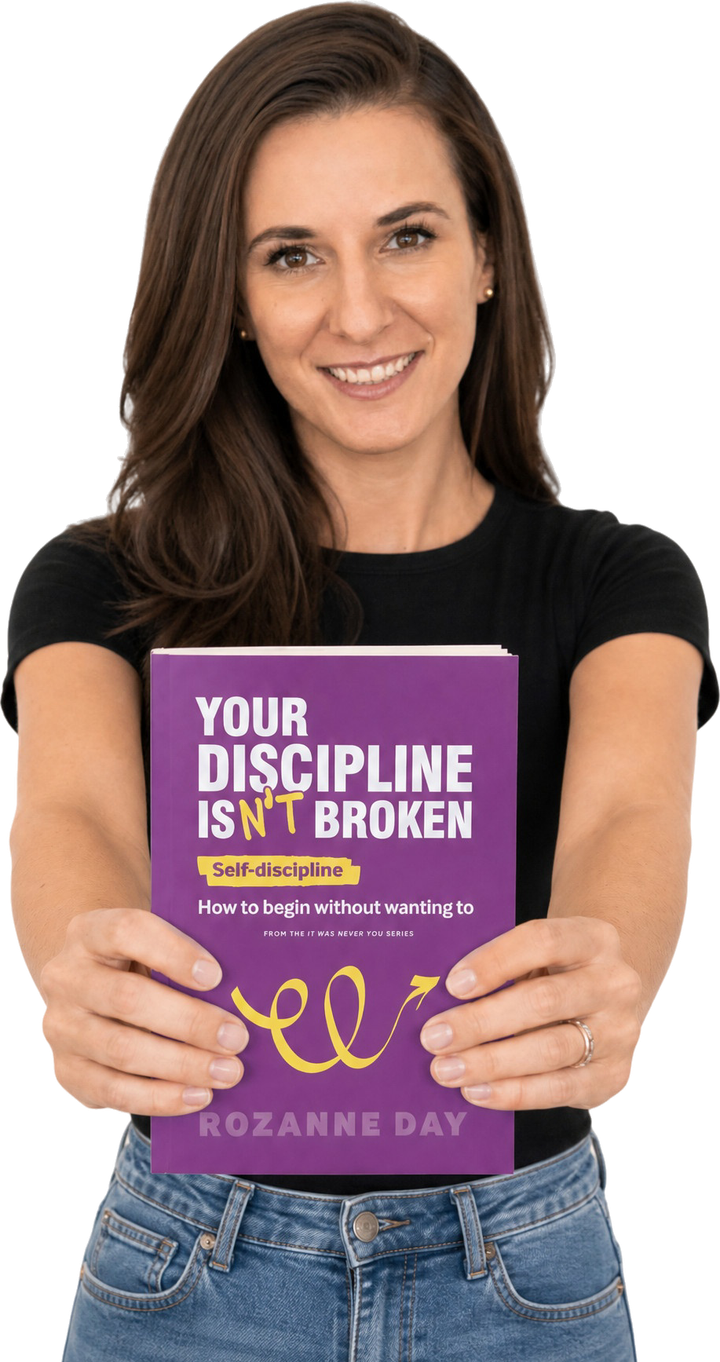
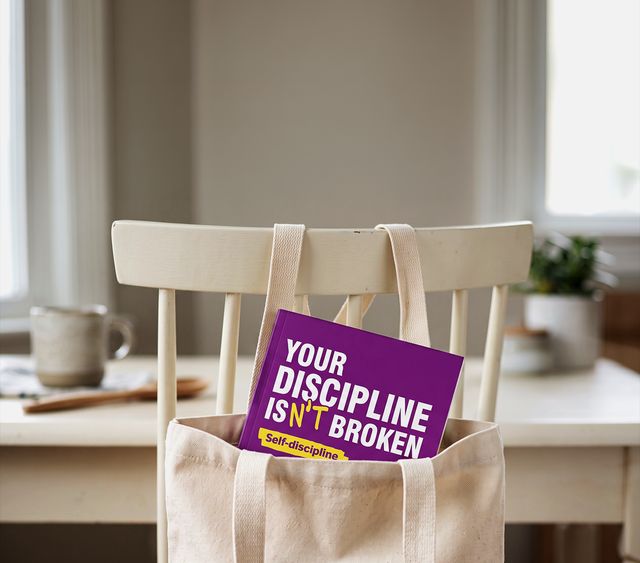
Your Discipline Isn't Broken
How to begin without wanting to
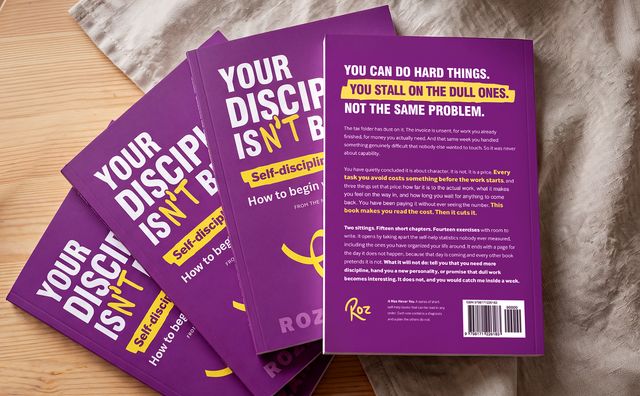
You can do hard things. You stall on the dull ones. Not the same problem.
A book from the It Was Never You series.
A quick check
This book is for you if...
- You keep meaning to start, and you still cannot pinpoint what stops you.
- There is a task you have moved to tomorrow so often it now has a feeling attached to it.
- You have tried the apps, the lists and the willpower, and none of it survived a bad week.
All these years you have called it a lack of discipline. Here is the sobering part: it was never you. This book shows you what is actually stopping you, and how to lower the load enough that you can start, even on the days you do not feel like it.
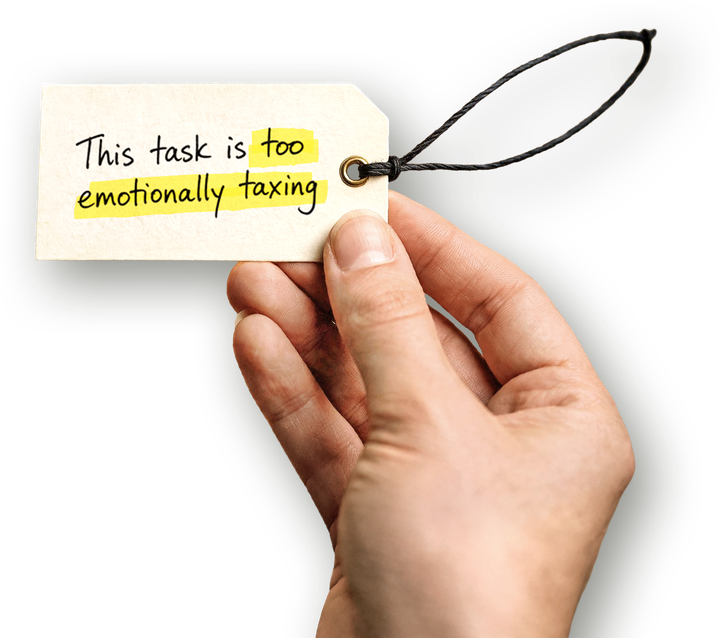
A task takes something out of you before you start it.
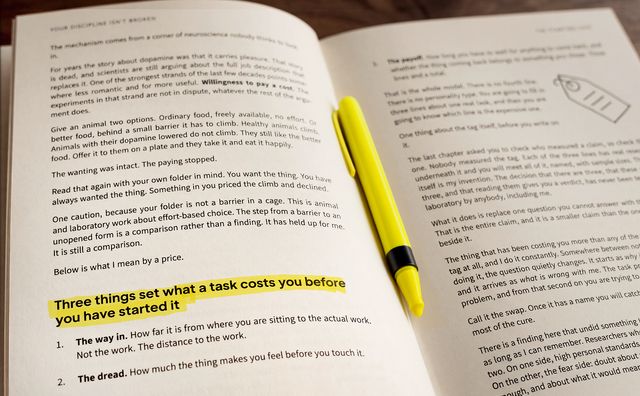
Three things decide how heavy it feels, and none of the three is who you are. You count one, you name one, you check one. Try it on the thing you are not doing.
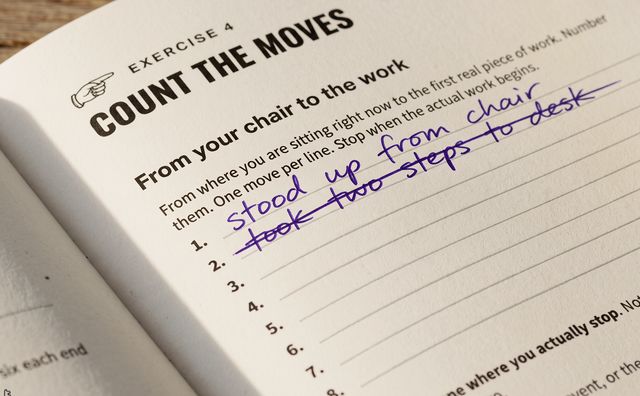
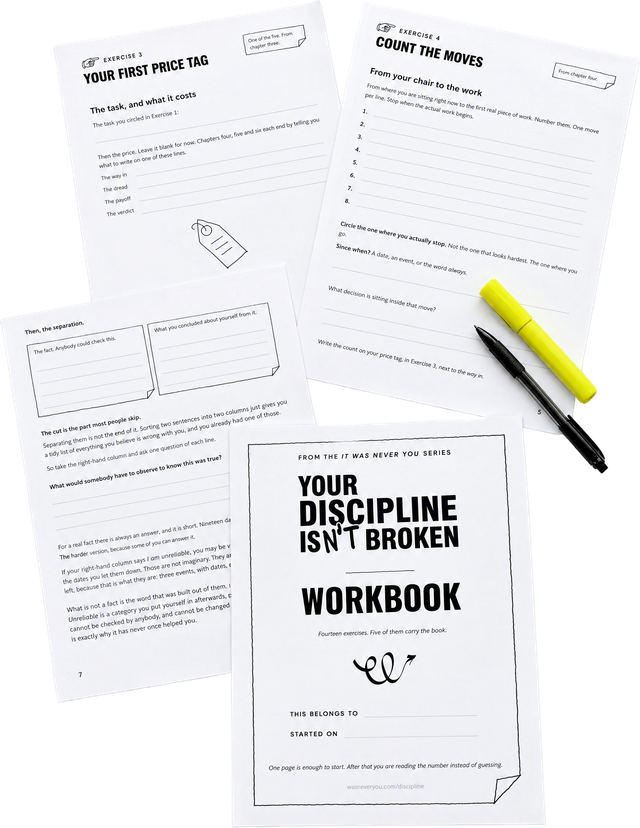
This is a rough read, not a test. The book walks you through it properly. You have just done exercise three. The fourth line, the verdict, is chapter eight, and what the book does with it takes the second half.
Short chapters. Practical exercises.
You could finish this in two sittings and still have something to show for it. Every chapter ends with a page you fill in, so the work happens while you are reading rather than after. Nothing to set up, no system to maintain, and nothing that needs you to be having a good week.
What this book does
It will not tell you that you need more discipline. It will not hand you a new personality. It will not promise that dull work becomes interesting, because it does not, and you would catch me inside a week. It does not promise you will feel calmer, and the last chapter says why.
This book has one job. It makes you see what a task takes out of you before you start, then takes one thing away.
About Rozanne Day
I built an agency, and it ran on the parts of the work that drained me most. For years I was tired, flat, and putting off things I knew perfectly well how to do, including, one Monday morning, the client work this book opens with. I assumed that was a discipline problem. Everybody does.
It was not. Starting took more out of me than I had that day, and I had been calling that me. Finding that out took a stack of weekends, a lot of research nobody asked me to do, and several mistakes I would rather not itemize. It changed the business, and then a good deal more than that.
I wrote this book because the fix that finally worked on me was too useful to keep quiet about.

Rozanne Day. Designer and strategist, South Africa.
Roz
Fourteen exercises
Every exercise Free to print
Every exercise from the back of the book, as one PDF, with the Restart Page on its own page at the end. The ones in the book take ink once, and there are exercises here you will want again in a year.
Free to print. It downloads here.
Questions people ask
About the book
What is Your Discipline Isn't Broken about?
It is a short self-discipline book for capable people who stall on dull tasks. Its argument is that avoiding a task is not a character flaw. Three things decide how heavy a task feels before you start, and none of them is who you are. The book shows you how to read those three on one real task, and then how to take one thing away.
Who is it for?
People who can do hard things and still cannot make themselves file the form, open the folder, send the invoice or make the call. It is written for adults, in plain language, and it assumes you are competent. It is not a system for managing a whole life; it works on one task at a time.
Is this a book about ADHD?
No, and it does not diagnose anyone. The book treats difficulty starting as a dimension that runs through everybody, and every tool in it works wherever you sit on that dimension, with or without a diagnosis. Where a finding is research and where it is one clinician's hunch, the text says which.
Is it based on research?
Yes. The back of the book names every source, with sample sizes, and the chapters separate peer-reviewed findings from my own comparisons across studies. One chapter takes apart famous self-help statistics that were never measured.
Does it promise I will stop procrastinating?
No. It promises to show you what a task takes out of you before you start it, and where you can take one thing away. It does not promise that dull work becomes interesting, and it says so in the first pages.
Is there a sample or a free chapter?
Not as a file. Amazon's Look inside on the listing shows the opening pages. The lines quoted on this page are from the book, and the workbook is free.
Is it part of a series?
Yes. It is one of the It Was Never You books, a series of short books that can be read in any order. Each one takes something you have quietly decided is wrong with you and finds what was actually happening instead.
Why do I never finish things I start?
Because what a task takes out of you changes while you are inside it. The steps between you and the work get longer as the easy parts run out, the point where any of it feels worth it drifts further away, and one morning the dread is waiting at a door you did not notice you were standing at. The book names all three and takes one thing away.
Is this lazy, or something else?
Lazy would be consistent. You can do hard things and stall on dull ones, which is not the same problem. The book treats that as three things that make a small task feel huge, none of which is your character, and it never tells you what you have.
Buying, reading, printing
Where can I buy it?
On Amazon, as a paperback and as a Kindle ebook, and the Kindle edition is in Kindle Unlimited. The button at the top of this page goes straight to the listing.
How long does it take to read?
Two sittings, or one long evening. The paperback is 124 pages and the break comes after chapter eight.
Is the workbook really free?
Yes. All fourteen exercises are one PDF, free to print as often as you like, and the download opens on this page as soon as you ask for it. The address is used to count how many people wanted it and to keep your download link working, and the newsletter is a separate box you can leave unticked.
Do I have to do all fourteen exercises?
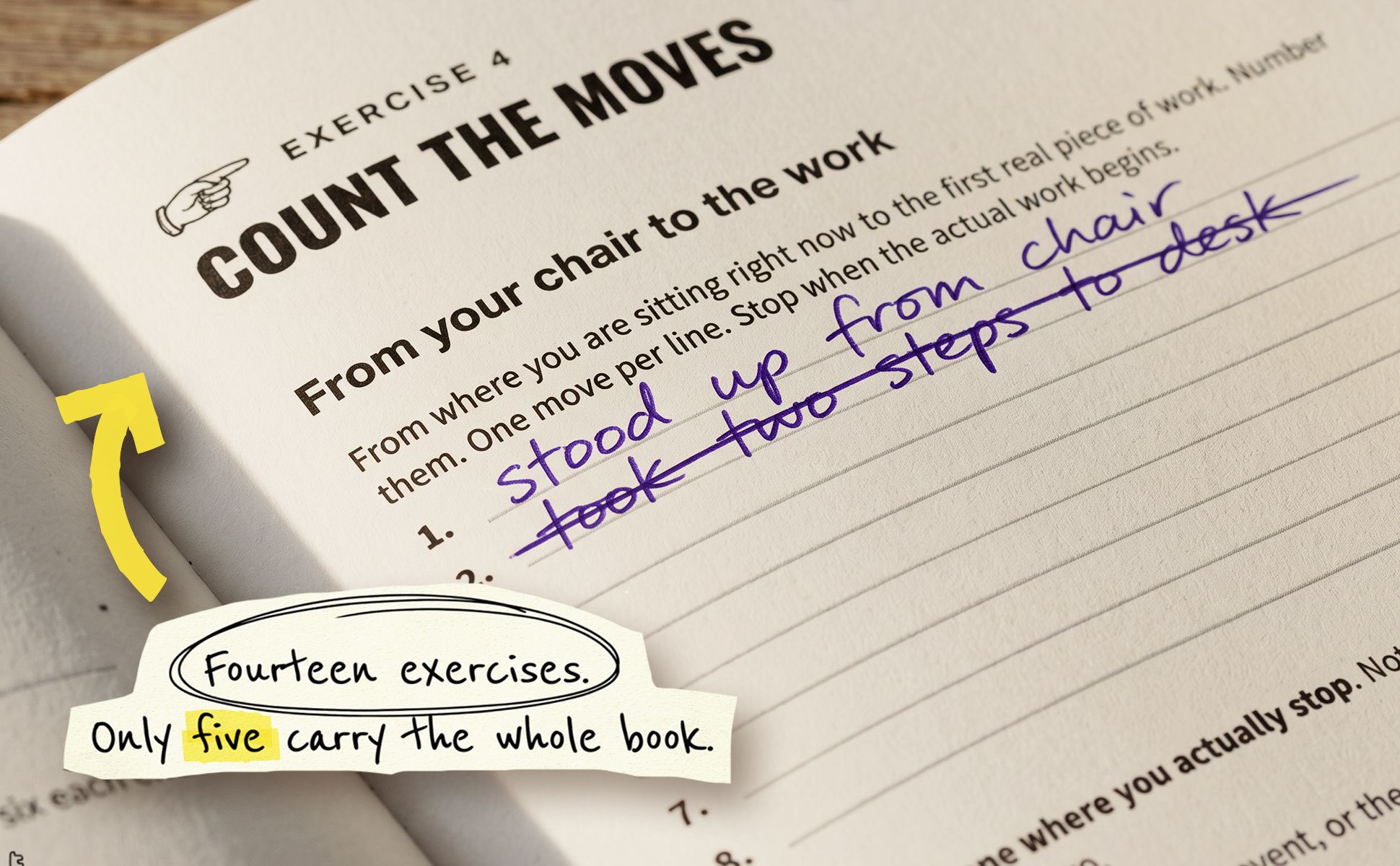
No. Five of them carry the book and the other nine are optional. The workbook says which.
I found an error. What do I do?
Use the form at the bottom of this page and choose "an error I found." The book argues that being handed an unchecked number is a kind of harm, so a correction is welcome, and it will be fixed.

Already read it?
Tell the next person what it was like
An honest review, even a couple of lines, is what helps somebody else work out whether this book is for them. It takes two minutes, and it does more than you would think.

Notes to self
Join the newsletter
In the book, the notes to self are the ones worth keeping. What to notice, what to try, what to stop arguing with. The newsletter is the same thing by email: something you can actually use that week, and first word when a new book lands. Nothing you could have read somewhere else.
I'd love to hear from you.
Every message comes to me, and I like knowing what landed. Tell me what worked, what did not, or what you want in the next one. If you found a mistake, give me the page and I will fix it.
When a book is not the right help
Sometimes it is bigger than a price
And when it is, please talk to somebody. In the United States, 988 is free to call or text, and an ordinary bad day is reason enough. Elsewhere, findahelpline.com lists free confidential lines in 175 countries, on the same terms. You matter with nothing done.